



How Can I Tell If I Am Overwatering My Trees, Plants, or Lawn?
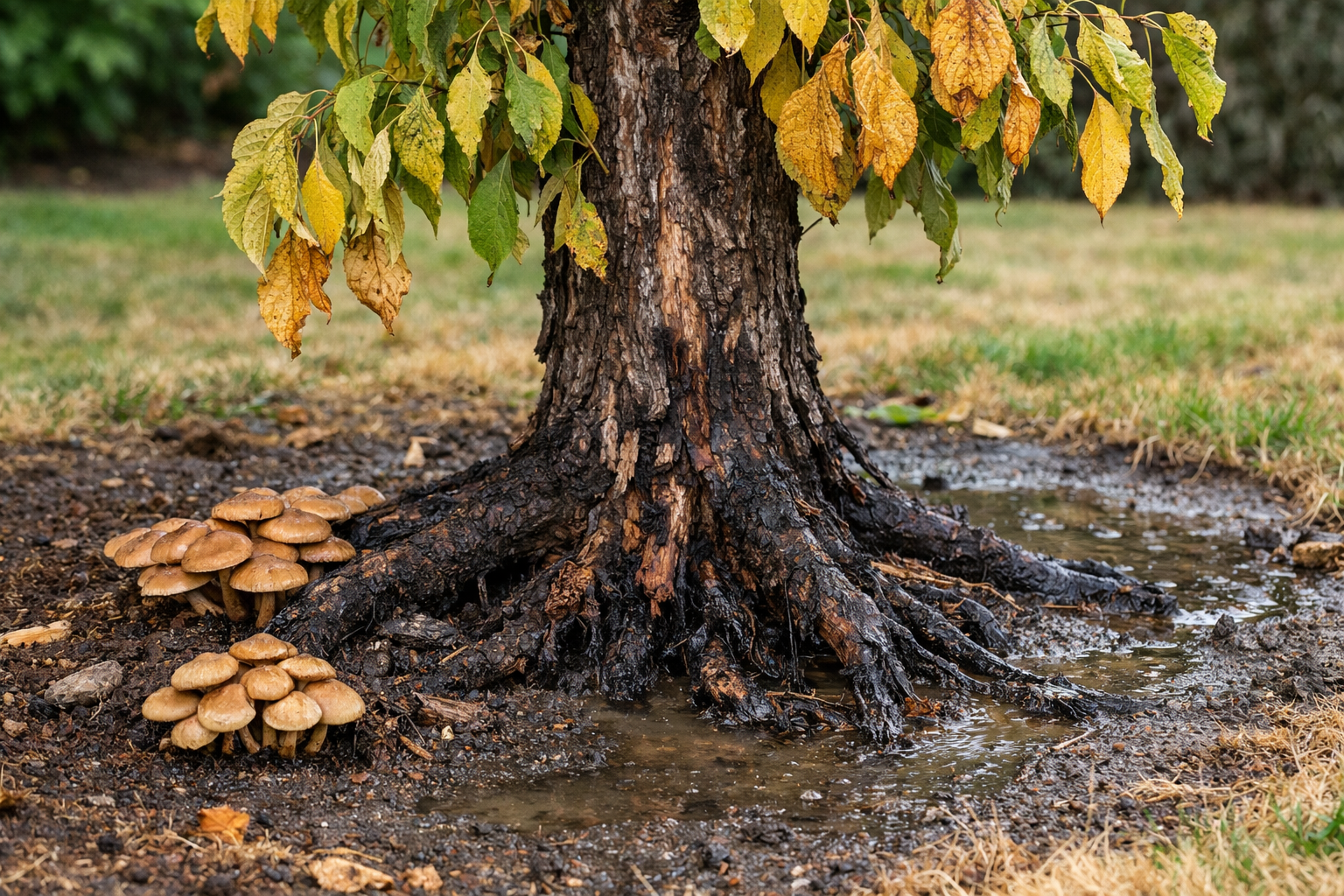
Overwatering is one of the most common and expensive mistakes property owners make.
It wastes water.
It drives up your bill.
And it quietly damages roots, soil, and irrigation systems.
Most people assume brown plants mean “not enough water.” In reality, overwatering often causes the exact same symptoms.
Let’s break this down clearly so you can diagnose the problem correctly and fix it fast.
Signs You’re Overwatering Trees


1. Yellowing Leaves (Especially Lower Leaves)
If leaves are turning yellow but feel soft and flexible, not dry and crispy, that’s usually too much water.
2. Wilting Even Though Soil Is Wet
Roots need oxygen. When soil stays saturated, roots suffocate and the tree wilts despite having plenty of water.
3. Mushrooms or Fungus Around the Base
Fungi thrive in constantly wet soil. If you see mushrooms at the trunk flare, your soil likely stays too wet.
4. Slow Growth
Too much water damages fine feeder roots. The tree cannot absorb nutrients properly, and growth stalls.
5. Root Rot Smell
If the soil smells sour or swampy, that’s a serious red flag.
Signs You’re Overwatering Plants and Shrubs


1. Leaves Droop But Stay Green
Overwatered plants often droop without turning brown immediately.
2. Edema (Blistered Leaves)
You may see small blisters or bumps on leaves caused by excess water pressure in plant cells.
3. Soft, Mushy Stems
This is advanced root damage. Act quickly.
4. Constantly Wet Soil
Stick your finger 2–3 inches into the soil. If it’s always wet between watering cycles, you’re likely overdoing it.
Signs You’re Overwatering Your Lawn


1. Yellow or Light Green Patches
Grass can look pale when roots are stressed.
2. Fungal Diseases
Brown patch, dollar spot, and other fungal issues explode in constantly wet lawns.
3. Mushrooms in Turf
Occasional mushrooms aren’t a big deal. Frequent ones mean excess moisture.
4. Spongy or Squishy Feel
If your lawn feels like a wet sponge days after watering, irrigation frequency is too high.
The Real Problem: Frequency vs. Duration
Here’s where most irrigation systems go wrong.
People water too frequently.
Shallow, frequent watering encourages shallow roots.
Shallow roots mean weaker plants and higher water demand.
Instead, most trees and lawns perform better with:
- Deeper watering
- Less frequent cycles
- Proper soil drainage
- Seasonal adjustments
How to Test If You’re Overwatering
Here’s a simple, practical method:
1. Dig a Small Test Hole
- 6 to 8 inches deep near the root zone.
- Wet and muddy 2–3 days after watering? Too frequent.
- Dry below 2 inches immediately after watering? Too short runtime.
2. Check Run Time vs. Soil Type
- Clay holds water longer.
- Sandy soil drains fast.
- Loam is ideal.
If you have clay soil and you’re watering daily, that’s almost certainly too much.
3. Review Your Irrigation Schedule
Ask yourself:
- Am I watering based on habit or season?
- Did I reduce frequency after cooler weather?
- Are multiple zones overlapping?
The Financial Cost of Overwatering
Overwatering doesn’t just hurt plants. It costs real money.
- Higher water bills
- Root disease treatment
- Turf replacement
- Tree removal
- Drainage repairs
On larger properties, this can become tens of thousands of dollars over time.
What To Do If You Suspect Overwatering
- Reduce frequency first (not necessarily runtime).
- Allow soil to partially dry between cycles.
- Improve drainage if soil stays saturated.
- Aerate lawns in compacted soil.
- Monitor zones independently.
If you manage multiple properties or irrigation zones, documenting run times, valve locations, and plant types helps you adjust intelligently instead of guessing.