



Irrigation for New Plant Establishment: How to Water Plants So They Actually Take Root
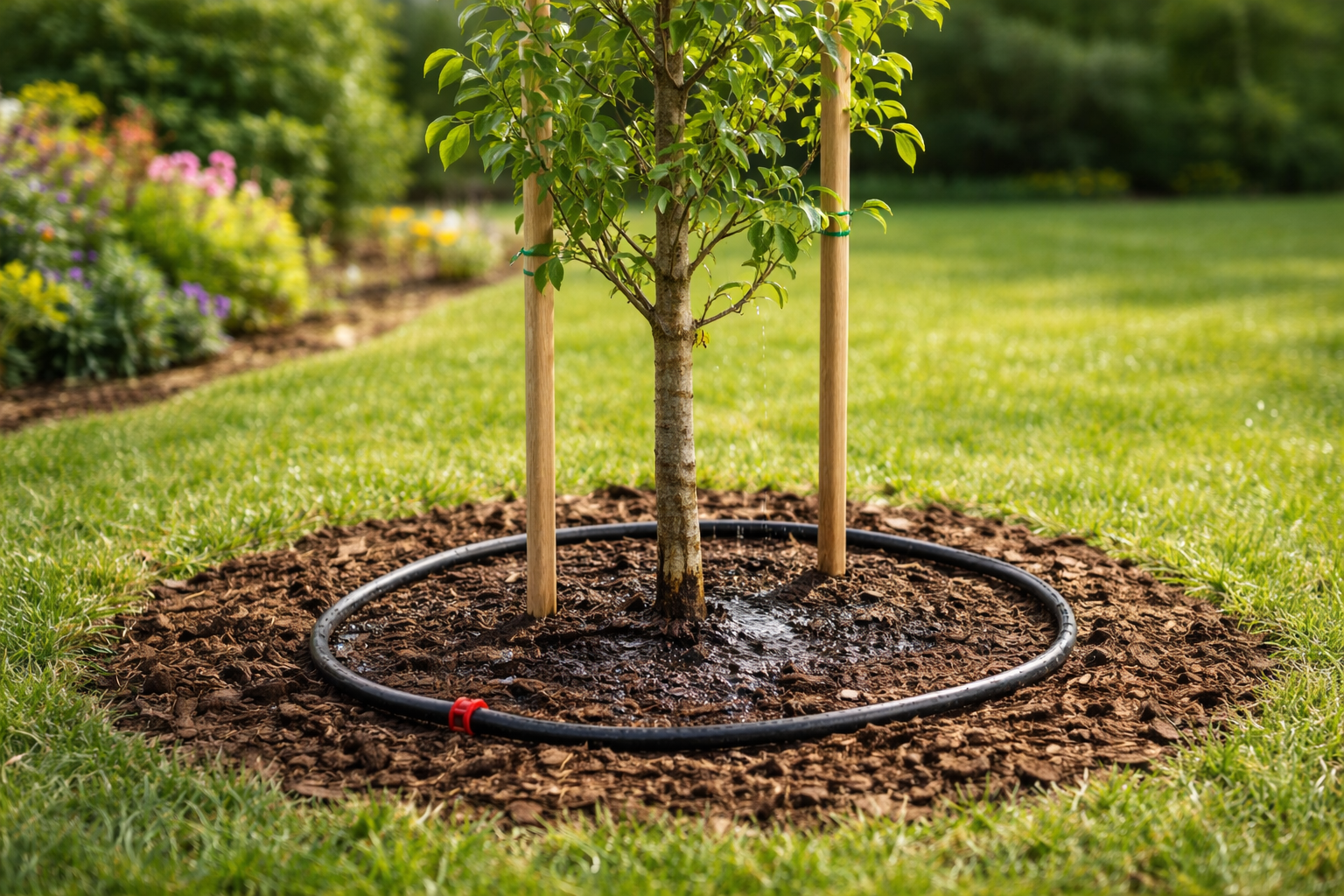
Plant failure is rarely caused by bad plants. More often, it happens because irrigation during the establishment period is misunderstood.
Newly planted trees, shrubs, and perennials have very limited root systems. They cannot access deep soil moisture yet, and they are far more sensitive to both underwatering and overwatering than established plants.
This article explains how to irrigate during plant establishment so roots grow deep, plants stabilize quickly, and long-term water needs decrease.
What “Establishment” Really Means
Plant establishment is the period during which a plant transitions from:
- A compact root ball
- To a root system that actively explores the surrounding soil
This process typically takes:
- Shrubs and perennials: several months
- Trees: one or more growing seasons
Until roots extend outward, irrigation must support the root ball, not the surrounding landscape.
The Most Common Mistake With New Plants
The most frequent mistake is watering new plants the same way as established plants.
Established plants benefit from deeper, less frequent watering. New plants do not yet have access to that deep moisture. If irrigation is too infrequent early on, the root ball dries out even when the surrounding soil appears moist.
At the same time, constant saturation can deprive roots of oxygen and slow establishment.
The goal is consistent moisture, not constant water.
How Irrigation Strategy Changes During Establishment
Early Establishment (First 2–4 Weeks)
- Roots are confined to the root ball
- Soil should remain evenly moist
- Shorter, more frequent irrigation is appropriate
- Missed watering during this phase can cause immediate stress
Mid Establishment (Next Several Weeks)
- Roots begin expanding outward
- Irrigation frequency can slowly decrease
- Runtime per event may increase slightly
- Encourage roots to search for moisture beyond the root ball
Late Establishment
- Roots are reaching the surrounding soil
- Transition toward normal irrigation schedules
- Fewer, deeper watering events
- Goal shifts from survival to resilience
This gradual change is critical. Abruptly switching schedules is a common cause of failure.
Drip Irrigation for New Plants
Drip irrigation is well suited for plant establishment when used correctly.
Key considerations:
- Emitters must be placed close to the root ball initially
- Flow rates should match plant size and soil type
- As plants establish, emitters should be moved or added outward
A common issue is leaving emitters too close to the trunk for too long, which can limit root spread and create dependency.
Trees Require a Different Mindset
Trees take longer to establish than most other plants, and they require deeper watering over a wider area.
Best practices include:
- Creating a watering basin or using multiple emitters
- Applying water slowly to encourage deep penetration
- Avoiding frequent shallow watering
A tree that is overwatered early can look healthy while developing a weak root system that fails later under stress.
Seasonal Considerations During Establishment
New plants are especially sensitive to seasonal extremes.
- Summer: Higher frequency, careful monitoring
- Spring/Fall: Moderate irrigation, ideal for root growth
- Winter: Water only during extended dry periods
Even in cooler seasons, newly planted material may need supplemental irrigation if rainfall is inconsistent.
Monitoring Without Guesswork
The most reliable way to evaluate irrigation during establishment is to check soil moisture directly.
- Soil near the root ball should be moist, not muddy
- Dry soil a few inches down is a sign irrigation is insufficient
- Saturated soil hours after watering indicates overwatering
Pressure monitoring can help confirm that irrigation is actually running when scheduled, but plant establishment success depends on delivery and consistency, not just runtime.
Transitioning to Normal Irrigation
One of the most overlooked steps is intentionally transitioning plants out of establishment mode.
Once plants are rooted:
- Reduce watering frequency
- Increase time between irrigation events
- Encourage deeper root growth
Plants that remain on establishment-style irrigation too long often struggle later when water availability changes.
Final Takeaway
New plant establishment requires a different irrigation strategy than long-term landscape maintenance. Success comes from consistent moisture early, gradual adjustments over time, and an intentional transition to deeper, less frequent watering.
Getting this phase right reduces long-term water use, improves plant health, and prevents costly replacements.